
Average Electric Bills by State: The Complete 2026 Breakdown
Updated July 2026
The average monthly electric bill in every U.S. state, what actually drives your bill, and how much you could save by switching providers in deregulated markets.
- $163/mo
- National Average
- $99
- Lowest (Utah)
- $203
- Highest (Hawaii)
- +5.4%
- YoY Increase
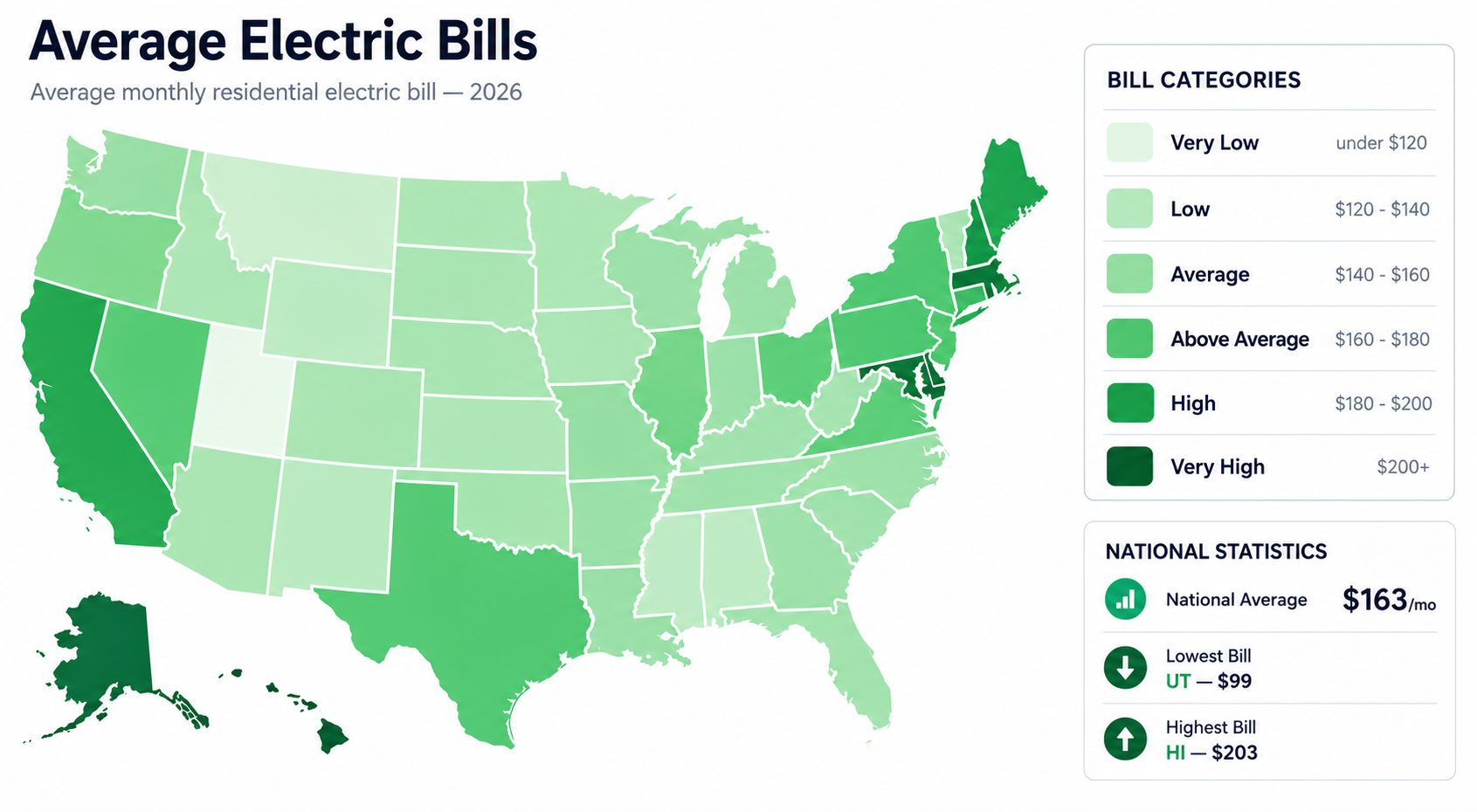
The average American household pays $163 a month for electricity — but that number swings dramatically depending on where you live, from $99/month in Utah to $203/month in Hawaii. Here's the full state-by-state breakdown, what actually drives your bill, and what you can do about it.
What Is the Average Monthly Electric Bill by State?
Your bill comes down to two variables multiplied together: your rate per kWh, and how much electricity you actually use. A state can have a cheap rate and still produce a high bill if consumption runs high — Alabama is a good example, with a below-average rate but heavy usage driving bills up. The reverse happens too: Massachusetts has one of the highest per-kWh rates in the country, but moderate consumption keeps its average bill from Hawaii-level extremes.
All 50 states + D.C. — National average: $163/mo (+5.4% vs. 2025).
| State | Avg Bill | Rate (¢/kWh) | Avg kWh/Mo | vs 2025 |
|---|---|---|---|---|
| Alabama | $186 | 16.79 | 1,108 | +4.8% |
| Alaska | $151 | 26.57 | 568 | +4.4% |
| Arizona | $155 | 15.62 | 992 | +3.6% |
| Arkansas | $141 | 13.32 | 1,059 | +2.9% |
| California | $185 | 33.75 | 548 | +8.9% |
| Colorado | $115 | 16.33 | 704 | +4.7% |
| Connecticut | $195 | 27.84 | 700 | +7.0% |
| Delaware | $163 | 18.39 | 886 | +5.3% |
| District of Columbia | $165 | 24.03 | 687 | +4.8% |
| Florida | $172 | 15.77 | 1,091 | +3.9% |
| Georgia | $153 | 14.60 | 1,048 | +3.5% |
| Hawaii | $203 | 39.89 | 509 | +7.5% |
| Idaho | $118 | 12.51 | 943 | +2.6% |
| Illinois | $131 | 18.82 | 696 | +6.0% |
| Indiana | $161 | 17.42 | 924 | +5.1% |
| Iowa | $127 | 13.54 | 938 | +3.2% |
| Kansas | $143 | 15.23 | 939 | +3.7% |
| Kentucky | $146 | 13.68 | 1,067 | +3.4% |
| Louisiana | $145 | 12.44 | 1,166 | +2.4% |
| Maine | $169 | 29.55 | 572 | +8.1% |
| Maryland | $172 | 22.40 | 768 | +6.4% |
| Massachusetts | $183 | 31.51 | 581 | +7.7% |
| Michigan | $143 | 20.55 | 696 | +6.1% |
| Minnesota | $131 | 16.44 | 797 | +4.5% |
| Mississippi | $163 | 14.53 | 1,122 | +3.3% |
| Missouri | $138 | 13.01 | 1,061 | +3.1% |
| Montana | $119 | 14.33 | 830 | +3.8% |
| Nebraska | $130 | 13.19 | 986 | +3.0% |
| Nevada | $127 | 13.83 | 918 | +3.6% |
| New Hampshire | $174 | 27.39 | 635 | +7.3% |
| New Jersey | $152 | 22.65 | 671 | +6.6% |
| New Mexico | $108 | 15.00 | 720 | +3.5% |
| New York | $160 | 27.07 | 591 | +7.1% |
| North Carolina | $149 | 15.12 | 986 | +3.7% |
| North Dakota | $137 | 12.87 | 1,065 | +2.5% |
| Ohio | $148 | 17.93 | 826 | +5.6% |
| Oklahoma | $146 | 14.48 | 1,008 | +3.9% |
| Oregon | $127 | 16.23 | 782 | +3.9% |
| Pennsylvania | $156 | 20.58 | 758 | +6.3% |
| Rhode Island | $179 | 31.30 | 572 | +8.4% |
| South Carolina | $169 | 15.71 | 1,076 | +4.1% |
| South Dakota | $137 | 14.15 | 969 | +3.3% |
| Tennessee | $147 | 13.12 | 1,121 | +2.8% |
| Texas | $176 | 16.18 | 1,088 | +4.8% |
| Utah | $99 | 13.75 | 720 | +3.2% |
| Vermont | $139 | 24.89 | 558 | +6.7% |
| Virginia | $155 | 16.43 | 943 | +4.6% |
| Washington | $125 | 14.12 | 885 | +3.5% |
| West Virginia | $156 | 16.26 | 959 | +4.5% |
| Wisconsin | $135 | 18.45 | 732 | +5.8% |
| Wyoming | $127 | 15.18 | 837 | +3.6% |
| U.S. Average | $163 | 18.05 | 903 | +5.4% |
Figures based on U.S. Energy Information Administration residential electricity data as of July 2026.
What Makes Up Your Electric Bill
Your monthly bill isn't just raw electricity use — it's a combination of several components that vary by home, utility, and climate.
The single largest driver of residential electricity use nationwide.
About $23/month of the average bill; heat pump water heaters can cut this 50–65%.
Switching from incandescent to LEDs cuts lighting costs by roughly 75%.
Refrigeration, laundry, cooking, TVs and standby draw. ENERGY STAR models use 10–50% less.
Which States Have the Highest & Lowest Electric Bills
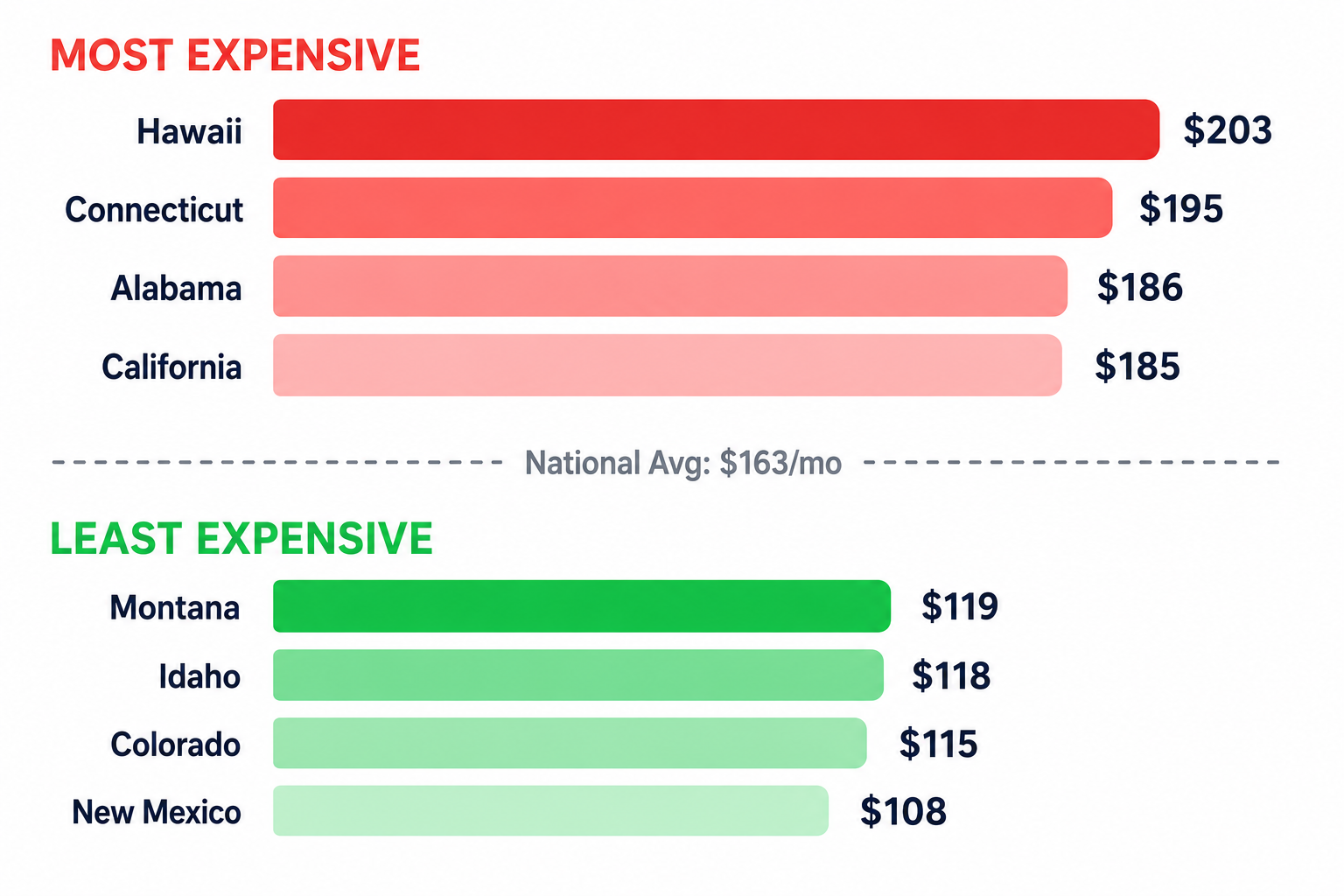
Hawaii holds the highest average monthly bill in the country at $203, despite having the lowest electricity consumption of any state at just 509 kWh/month. The reason is its rate — at 39.89¢/kWh, more than double the national average, driven by the state's heavy reliance on imported petroleum for power generation since it isn't connected to a mainland grid.
Utah sits at the opposite end with the lowest average bill nationally at $99/month, benefiting from a below-average rate combined with a dry climate that limits air conditioning demand.
The five highest average bills: Hawaii ($203), Connecticut ($195), Alabama ($186), California ($185), and Massachusetts ($183).
The five lowest average bills: Utah ($99), New Mexico ($108), Colorado ($115), Idaho ($118), and Montana ($119).
Rate and consumption don't always move together. Louisiana, for example, has one of the cheapest electricity rates in the country, but heavy year-round air conditioning demand in the South still pushes its bill above several states with much higher per-kWh rates.
How Has the Average Electric Bill Changed Over Time
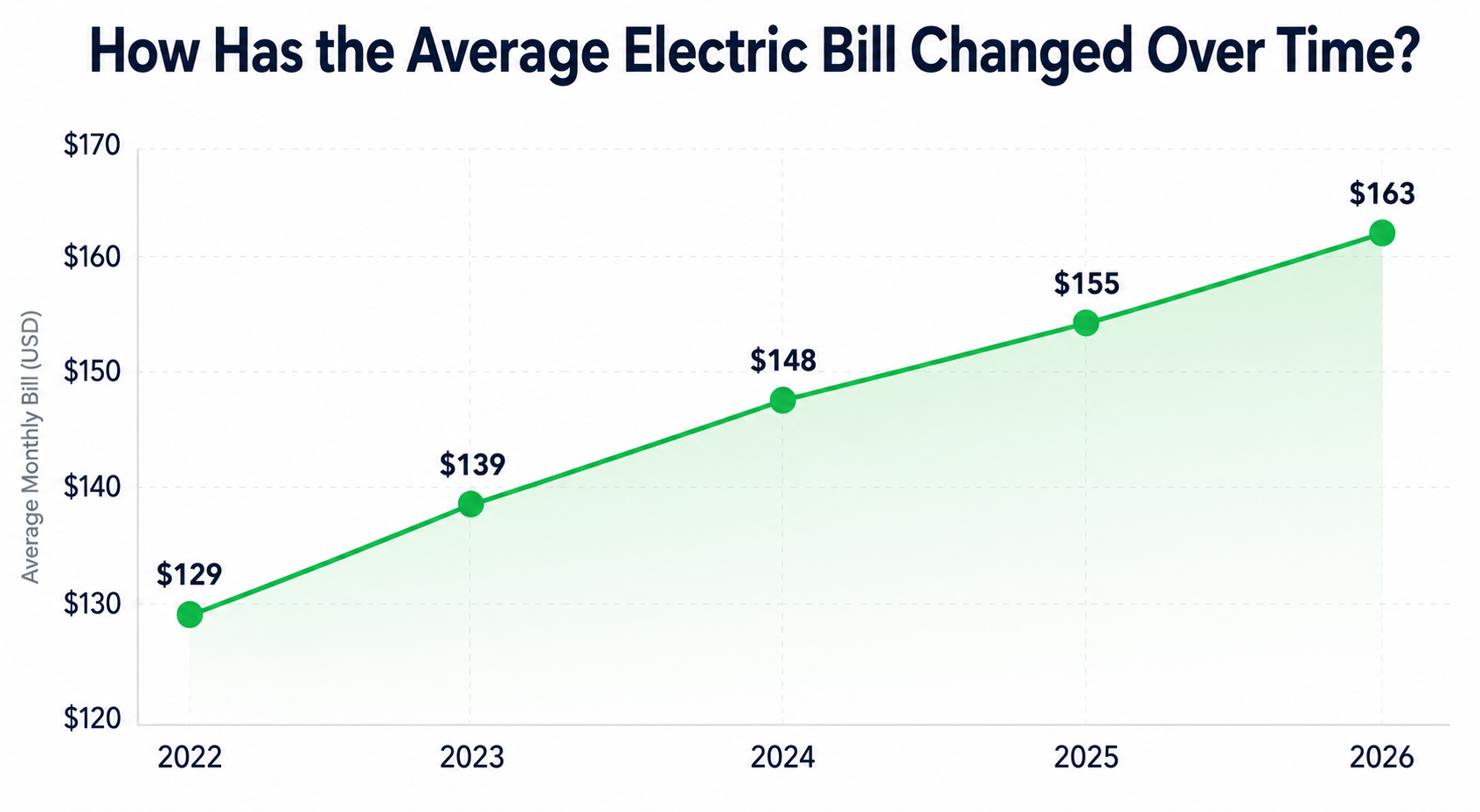
| Year | Avg Bill/Mo | Avg Rate (¢/kWh) | Avg kWh/Mo | YoY Change |
|---|---|---|---|---|
| 2022 | $129 | 14.92 | 865 | — |
| 2023 | $139 | 15.85 | 877 | +7.8% |
| 2024 | $148 | 16.63 | 890 | +6.5% |
| 2025 | $155 | 17.13 | 905 | +4.7% |
| 2026 | $163 | 18.05 | 903 | +5.2% |
The national average electric bill has climbed 26% over the past five years, from $129/month in 2022 to $163/month in 2026. The most recent jump was driven primarily by a 5.4% increase in per-kWh rates rather than higher usage — consumption actually held roughly flat, as efficiency gains from newer appliances and LED adoption offset the added load from EV charging and home electrification. Rising natural gas price volatility, grid-hardening investments following extreme weather events, and growing data center electricity demand all contributed to higher generation costs industry-wide.
How to Lower Your Electric Bill
There are only two real levers: use less electricity, or pay a lower rate for the electricity you do use. In deregulated states, you can pull both at once.
In deregulated markets, comparing suppliers is the fastest way to cut your bill.
Compare with MayaAuto-adjusts temperatures while you're asleep or away — HVAC savings with no daily effort.
LEDs use 75% less energy and last up to 25× longer. Replacing 20 bulbs saves ~$150/yr.
Weatherstripping and caulking around windows, doors and ducts pay back fast.
Compare Plans in Your State
97 Options serves customers across Texas, Illinois, Pennsylvania, New Jersey, Ohio, and Connecticut. Enter your ZIP code to see live plan offers, or upload your current bill and let Maya AI instantly check whether switching could lower your rate.
Check your rate nowFrequently Asked Questions
What is the average electric bill in the US?
The average monthly electric bill in the U.S. is $163 as of July 2026, based on an average residential rate of 18.05¢/kWh and average monthly consumption of 903 kWh. Bills range from $99/month in Utah to $203/month in Hawaii.
Which state has the lowest electric bill?
Utah has the lowest average monthly bill at $99/month, driven by a below-average rate of 13.75¢/kWh combined with moderate consumption of 720 kWh/month.
Which state has the highest electric bill?
Hawaii has the highest average monthly bill at $203/month. Despite having the lowest consumption in the country at 509 kWh/month, its electricity rate of 39.89¢/kWh — driven by imported petroleum fuel — pushes its bill above every other state.
Why is my electric bill so high?
Common causes include seasonal temperature extremes increasing HVAC use, older or inefficient appliances, poor home insulation, a high per-kWh rate from your utility, phantom load from devices left on standby, and increased usage from working at home. Check your kWh consumption against the state average — if your usage is above 903 kWh/month, usage is likely the main driver; if your usage is average but your bill is still high, your rate is probably the issue.
How can I lower my electric bill?
In deregulated states, switching providers is typically the fastest way to save, often 15–30% with no lifestyle changes required. Beyond that: install a smart thermostat, switch to LED bulbs, seal air leaks, use ENERGY STAR-rated appliances, and shift high-energy tasks to off-peak hours.
What uses the most electricity in a home?
Heating and cooling account for roughly 46% of the average home's electricity use, followed by appliances and electronics at about 30%, water heating at 14%, and lighting at 10%. In hot-climate states, HVAC alone can exceed half of total usage.
Does the average electric bill include taxes and fees?
Yes. The figures on this page reflect total billed amounts, including generation charges, transmission and distribution fees, taxes, and applicable surcharges. Generation typically makes up 40–60% of the total bill, with delivery charges and taxes making up the remainder.